Monday, May 14, 2012

Thursday, May 10, 2012
DAY 60 Locke, Popper, Seminar Prep
We spend the day prepping for the seminar, notably going over Locke and Popper - notes below. We chose numbers out of a hat and then signed up for our groups as follows: (if you're not on the list below please email me and I'll put you in either Group 2 or 3 - first come first served, max 11 in a group :-)
Seminar 1 - - Monday - Francis Bacon and the New Method
(Previous Day 1 Group Siobhan, Nirubaa, Rachael, Nicole, Kaitlyn T.,Chelsea , Kandis, Jaslynn, Sara, Ashley K., Holly (11))
New Group: Ashley K, Nicole, Sara, Emily, Dana, Kaitlyn B., Kim, Taylor
Seminar 2 - Tuesday - John Locke and the Essay on Human Understanding
(Previous Day 2 Group - Emily, Taylor, Kim, Liny, Avery, August, Kyle, Jake, Rhiannon, Carly, Dani (11))
New Group: Ashley S., Kandis, Kaitlyn T., Avery, August, Jaslynn, Rhiannon, Dani, Michelle, Liny, Chelsea
Seminar 3 - Wednesday and Karl Popper on Falsifiability
(Previous Day 3 group - Lorenzo, Kaitlyn B., Ashley S., Nick, Jade, Cassie, Chris, Michelle, Dana, Ryan, Justin (11)
New Group: Justin, Carly, Kyle, Jake, Lorenzo, Ryan, Rachael, Chris, Nick
If you're not on a list above please email me and I'll put you in a group of your choice.
Notes on Locke -
Discusses how we think and perceive - through language, logic, religion. Our biggest problem as people is that we fail to see the limits of our understanding.
Biggest argument - we are NOT born with innate knowledge, a priori knowledge. Plato and Descartes argued that we were. Came up with the concept of a blank slate, "tabula rasa". We can only know things if we first experience them.
Robert Boyle - Corpuscular Hypothesis of Matter - the matter is made up of tiny, invisible particles. This gave Locke the idea that even though we cannot detect these tiny particles, they still exist, and they give matter its properties (size, shape, movement).
Science can define these properties but is still limited.
Locked examined:
1. Where our ideas come from
2. What it means to have these ideas and what exactly are these ideas
3. Issues of faith and opinion
Argued against a priori knowledge. Plato and Descartes said there many universal bits of knowledge. But, Locked said that there are no things accepted by ALL humans.
Also argued that people cannot have ideas in their minds of which they are not aware. He said that we cannot possess even the most basic principles unless we are taught them or have thought them through.
So, I guess Locke was happy with how he eliminated a priori knowledge.
Two sources of knowledge, Simple and Complex:
Simple Ideas:
1. ideas we get from a single sense (sight, or taste)
2. ideas we get from many senses (shape, size)
3. ideas coming from reflection on experiences
4. ideas coming from a combination of sensation and reflection (unity, existence, pain, substance)
Within Simple ideas there are:
Primary Qualities: texture, number, size, shape, motion - these resemble their causes
Secondary Qualities: colour, sounds, taste, smell - these do not resemble their causes
Complex Ideas:
Complex ideas combine, compare and abstract (subtracting everything until you're left with the item/idea)
Locke had a problem with the language we use to describe knowledge:
1. a word can imply a complex idea
2. words have no standard meaning
3. people use words without knowing what they really mean
4. we use words inconsistently
5. we change the meanings of words
6. we assume that others understand us
Locke argued that KNOWLEDGE is the relation between ideas, all of which is in the mind. We produce knowledge:
1. Identity (blue is blue), diversity (blue is not yellow)
2. relation (explain a triangle, then explain another triangle similarly and they are congruent)
3. coexistence (iron is affected by magnetism)
4. realizing that existence belongs to the ideas themselves, and is not in the mind.
Notes on Sir Karl Popper on Falsifiability
Bottom line on the Scientific Method is that science is trial and error.
This idea, widely accepted today, defines the Modern Scientific Method - learning from our mistakes.
Falsifiability - logical possibility that a hypothesis or theory can be contradicted by an observation or the outcome of an experiment.
"All Swans are White" - this IS falsifiable - we can go looking for swans and note their colour. So, falsification tests for falseness instead of testing for correctness.
"White Swans Do Exist" - this is NOT falsifiable - no counter-example is logically possible.
Popper stressed that unfalsifiable statements are important in science because they can and should be embedded. E.g., while "all people are mortal" is NOT falsifiable, it IS a logical consequence of the true statement, "Every human dies before the age of 150."
Science is a successive rejection of falsified theories - when newer work shows improved or different results, they supersede previous work.
According to Popper and Anceriz, no hypothesis is EVER confirmed. The best we can hope for is that a hypothesis survives so many tests that it's just silly to keep testing it.
It's at that point that we start to consider it a FACT - even though it remains in the realm of theory or hypothesis.
Popper explains how science developed from myths.
Seminar 1 - - Monday - Francis Bacon and the New Method
(Previous Day 1 Group Siobhan, Nirubaa, Rachael, Nicole, Kaitlyn T.,Chelsea , Kandis, Jaslynn, Sara, Ashley K., Holly (11))
New Group: Ashley K, Nicole, Sara, Emily, Dana, Kaitlyn B., Kim, Taylor
Seminar 2 - Tuesday - John Locke and the Essay on Human Understanding
(Previous Day 2 Group - Emily, Taylor, Kim, Liny, Avery, August, Kyle, Jake, Rhiannon, Carly, Dani (11))
New Group: Ashley S., Kandis, Kaitlyn T., Avery, August, Jaslynn, Rhiannon, Dani, Michelle, Liny, Chelsea
Seminar 3 - Wednesday and Karl Popper on Falsifiability
(Previous Day 3 group - Lorenzo, Kaitlyn B., Ashley S., Nick, Jade, Cassie, Chris, Michelle, Dana, Ryan, Justin (11)
New Group: Justin, Carly, Kyle, Jake, Lorenzo, Ryan, Rachael, Chris, Nick
If you're not on a list above please email me and I'll put you in a group of your choice.
Notes on Locke -
Discusses how we think and perceive - through language, logic, religion. Our biggest problem as people is that we fail to see the limits of our understanding.
Biggest argument - we are NOT born with innate knowledge, a priori knowledge. Plato and Descartes argued that we were. Came up with the concept of a blank slate, "tabula rasa". We can only know things if we first experience them.
Robert Boyle - Corpuscular Hypothesis of Matter - the matter is made up of tiny, invisible particles. This gave Locke the idea that even though we cannot detect these tiny particles, they still exist, and they give matter its properties (size, shape, movement).
Science can define these properties but is still limited.
Locked examined:
1. Where our ideas come from
2. What it means to have these ideas and what exactly are these ideas
3. Issues of faith and opinion
Argued against a priori knowledge. Plato and Descartes said there many universal bits of knowledge. But, Locked said that there are no things accepted by ALL humans.
Also argued that people cannot have ideas in their minds of which they are not aware. He said that we cannot possess even the most basic principles unless we are taught them or have thought them through.
So, I guess Locke was happy with how he eliminated a priori knowledge.
Two sources of knowledge, Simple and Complex:
Simple Ideas:
1. ideas we get from a single sense (sight, or taste)
2. ideas we get from many senses (shape, size)
3. ideas coming from reflection on experiences
4. ideas coming from a combination of sensation and reflection (unity, existence, pain, substance)
Within Simple ideas there are:
Primary Qualities: texture, number, size, shape, motion - these resemble their causes
Secondary Qualities: colour, sounds, taste, smell - these do not resemble their causes
Complex Ideas:
Complex ideas combine, compare and abstract (subtracting everything until you're left with the item/idea)
Locke had a problem with the language we use to describe knowledge:
1. a word can imply a complex idea
2. words have no standard meaning
3. people use words without knowing what they really mean
4. we use words inconsistently
5. we change the meanings of words
6. we assume that others understand us
Locke argued that KNOWLEDGE is the relation between ideas, all of which is in the mind. We produce knowledge:
1. Identity (blue is blue), diversity (blue is not yellow)
2. relation (explain a triangle, then explain another triangle similarly and they are congruent)
3. coexistence (iron is affected by magnetism)
4. realizing that existence belongs to the ideas themselves, and is not in the mind.
Notes on Sir Karl Popper on Falsifiability
Bottom line on the Scientific Method is that science is trial and error.
This idea, widely accepted today, defines the Modern Scientific Method - learning from our mistakes.
Falsifiability - logical possibility that a hypothesis or theory can be contradicted by an observation or the outcome of an experiment.
"All Swans are White" - this IS falsifiable - we can go looking for swans and note their colour. So, falsification tests for falseness instead of testing for correctness.
"White Swans Do Exist" - this is NOT falsifiable - no counter-example is logically possible.
Popper stressed that unfalsifiable statements are important in science because they can and should be embedded. E.g., while "all people are mortal" is NOT falsifiable, it IS a logical consequence of the true statement, "Every human dies before the age of 150."
Science is a successive rejection of falsified theories - when newer work shows improved or different results, they supersede previous work.
According to Popper and Anceriz, no hypothesis is EVER confirmed. The best we can hope for is that a hypothesis survives so many tests that it's just silly to keep testing it.
It's at that point that we start to consider it a FACT - even though it remains in the realm of theory or hypothesis.
Popper explains how science developed from myths.
Wednesday, May 9, 2012
DAY 59 Seminars in Epistemology
Seminar Documents -
and
Seminar Instructions
Notes on Francis Bacon's "New Method"
This was Part 1 of a larger work, the Great Instauration - a new way of investigating nature - really, the beginning of the journey to the modern scientific method.
He suggests a new system of logical conclusions based on induction rather than on syllogism.
Induction - begins with the facts and works towards general axioms. An axiom is a statement generally thought to be true.
'Currently men's minds are filled with various foolish and incorrect notions that prevent them from understanding nature properly.' "False notions" are based on idols -
Idol of the Tribe - overestimate our own importance in how we perceive things.
Idol of the Cave - we think we all live in the same cave, that our personal experience is similar to others'.
Idol of the Marketplace - language interferes with understanding - it's always biased.
Idol of the Theater - we don't want to lose face, we tend to defend our own beliefs.
Up to 1620, the Aristotelian Method of Syllogism was used widely. Bacon argued that people gave excessive respect for ancient authors.
Syllogisms
Categorical Syllogism:
a. Madelle is human.
b. Humans are mortal.
c. Therefore, Madelle is mortal.
Disjunctive Syllogism:
a. The meeting is either at home or at school.
b. The meeting is not at home.
c. Therefore, the meeting is at school.
Conditional Syllogism:
a. If Johnny is eating sweets every day, he is placing himself at risk of diabetes.
b. Johnny does NOT eat sweets every day.
c. Therefore, Johnny is not placing himself at risk of diabetes.
This last example is flawed because there are OTHER factors that could be involved. It is this kind of thinking involving understanding nature that Bacon argued against. He argued that the original Organon (Aristotle's method of acquiring information) was flawed as it was based on the third example AND that if based on the first two examples, there was still much room for error.
William Gilbert (Elizabeth I doctor) - he established the fact that the earth is like a giant magnet - positive charge at both poles. He began the new thinking, but died before completing it. Bacon completed this line of thinking.
Privileged Instances - Bacon identified many examples of nature that reveal the truth in great detail and with great clarity.
and
Seminar Instructions
Notes on Francis Bacon's "New Method"
This was Part 1 of a larger work, the Great Instauration - a new way of investigating nature - really, the beginning of the journey to the modern scientific method.
He suggests a new system of logical conclusions based on induction rather than on syllogism.
Induction - begins with the facts and works towards general axioms. An axiom is a statement generally thought to be true.
'Currently men's minds are filled with various foolish and incorrect notions that prevent them from understanding nature properly.' "False notions" are based on idols -
Idol of the Tribe - overestimate our own importance in how we perceive things.
Idol of the Cave - we think we all live in the same cave, that our personal experience is similar to others'.
Idol of the Marketplace - language interferes with understanding - it's always biased.
Idol of the Theater - we don't want to lose face, we tend to defend our own beliefs.
Up to 1620, the Aristotelian Method of Syllogism was used widely. Bacon argued that people gave excessive respect for ancient authors.
Syllogisms
Categorical Syllogism:
a. Madelle is human.
b. Humans are mortal.
c. Therefore, Madelle is mortal.
Disjunctive Syllogism:
a. The meeting is either at home or at school.
b. The meeting is not at home.
c. Therefore, the meeting is at school.
Conditional Syllogism:
a. If Johnny is eating sweets every day, he is placing himself at risk of diabetes.
b. Johnny does NOT eat sweets every day.
c. Therefore, Johnny is not placing himself at risk of diabetes.
This last example is flawed because there are OTHER factors that could be involved. It is this kind of thinking involving understanding nature that Bacon argued against. He argued that the original Organon (Aristotle's method of acquiring information) was flawed as it was based on the third example AND that if based on the first two examples, there was still much room for error.
William Gilbert (Elizabeth I doctor) - he established the fact that the earth is like a giant magnet - positive charge at both poles. He began the new thinking, but died before completing it. Bacon completed this line of thinking.
Privileged Instances - Bacon identified many examples of nature that reveal the truth in great detail and with great clarity.
DAY 58 Seminar Start and Critical Thinking
I distributed the materials for the upcoming seminars - then you worked on your Critical Thinking Question for Epistemology.
I'll post the Seminar Stuff in tomorrow's blog.
I'll post the Seminar Stuff in tomorrow's blog.
Monday, May 7, 2012
DAY 57 Thinking Critically in Epistemology
Today we are having a good look at the Critical Thinking expectations for your upcoming work.
Tomorrow I'll hand out the Seminar Readings for next week.
Tomorrow I'll hand out the Seminar Readings for next week.
DAY 56 Bully, the film
Today we joined 125 students and six staff for a trip to the Bookshelf Theater in Guelph to see the film, Bully. We noted that bullying is not part of human nature, rather it is a behaviour that is a choice. The most important group in preventing and stopping bullying is the bystander - those around the victim and the bully need to take action and intervene with a few words letting the bully know that their behaviour is not cool and letting the victim know that they have some support and are not alone in a difficult situation.
 The connection to Philosophy here is that this is a real-life situation that should be approached from a particular point of view, i.e. a particular philosophy. Bullying is a choice of behaviours, it is not inevitable. Victims need to speak up to a caring adult. And bystanders need to say something - by saying nothing they are empowering the bully.
So, when asked about your own ideas about bullying you can now articulate this philosophy!

So, when asked about your own ideas about bullying you can now articulate this philosophy!
DAY 55 Critical Thinking Question
Today we reviewed Descartes' Cogito argument and then we got to work on the Epistemology Critical Thinking Question.
Tomorrow is our field trip to see Bully at the Bookshelf Theater in Guelph.
Tomorrow is our field trip to see Bully at the Bookshelf Theater in Guelph.
DAY 54 Summary of Descartes' "Cogito" Argument
This is a summary of Descartes' "Cogito" Argument - his famous, "I think therefore I am" statement. While he actually never wrote that exact phrase, the main point of Descartes was that it is necessary to establish a clean foundation upon which to build knowledge (the beginning of the school of Foundationalism in Epistemology). Descartes accomplished this by doubting away each presupposition to the point where the only thing he could know for certain was that he was thinking - in other words by the very act of doubting things he could prove only that he was a doubter, a thinker. Yes, he was the ultimate skeptic!
I had to leave at 12:00 today and you took up the Cogito torch with Mrs. Edwards.
I had to leave at 12:00 today and you took up the Cogito torch with Mrs. Edwards.
Tuesday, May 1, 2012
Day 53 Descartes and Epistemology - the "Foundation"
Many of you were away today due to the play and other things. First, our opening discussion . . .
IS IT THE TRUTH WHEN . . .
1. No one believes it?
2. Only one person believes it?
3. It is accepted as fact?
4. It is proven by science?
5. It is proven by religion?
6. It hurts someone or a group?
In two columns, write the titles - 1. One thing I "Know", 2. One thing I "Believe" (Things you think are true).
Things I Know are True
Stop Signs are Red
We need O2 to live
Two masses will be attracted by gravity
You know your own age
The earth is a ball
The Sky is Blue
You have ten digits on your hands
You know you're loved
You woke up today (on the right side of the bed!)
You exist
You can think
Your own birthdate
You live in Acton
You can drive a car
Air contains O2
1+1=2
Things you Believe are True
Religions are False
That space exists
Videogames are fun
We learn in school
We don't learn in school
Fitness is healthy
Jesus died on the cross for you
Jesus died on the cross for you
Jesus died on the cross for you
That a higher power exists
The universe is expanding
Other lifeforms exist out there
Religion is false
Religion is false
You have a bright future
What is it about "1." that makes it different from "2."?
# 1 will always have the same result while # 2 could have different results.
# 1 is a complete reality to you but # 2 still has room for movement.
# 1 is less subjective than # 2
# 1 is objective, # 2 subjective
Can you establish a "rule" to "test" the notion of "truth" for you?
More frequent experiences can help determine the truth. But what is the evidence is false? The Methodology could be flawed.
Homework - have this conversation with your mom or dad tonight - what is their "rule" for determining truth? what is your "rule"?
IS IT THE TRUTH WHEN . . .
1. No one believes it?
2. Only one person believes it?
3. It is accepted as fact?
4. It is proven by science?
5. It is proven by religion?
6. It hurts someone or a group?
In two columns, write the titles - 1. One thing I "Know", 2. One thing I "Believe" (Things you think are true).
Things I Know are True
Stop Signs are Red
We need O2 to live
Two masses will be attracted by gravity
You know your own age
The earth is a ball
The Sky is Blue
You have ten digits on your hands
You know you're loved
You woke up today (on the right side of the bed!)
You exist
You can think
Your own birthdate
You live in Acton
You can drive a car
Air contains O2
1+1=2
Things you Believe are True
Religions are False
That space exists
Videogames are fun
We learn in school
We don't learn in school
Fitness is healthy
Jesus died on the cross for you
Jesus died on the cross for you
Jesus died on the cross for you
That a higher power exists
The universe is expanding
Other lifeforms exist out there
Religion is false
Religion is false
You have a bright future
What is it about "1." that makes it different from "2."?
# 1 will always have the same result while # 2 could have different results.
# 1 is a complete reality to you but # 2 still has room for movement.
# 1 is less subjective than # 2
# 1 is objective, # 2 subjective
Can you establish a "rule" to "test" the notion of "truth" for you?
More frequent experiences can help determine the truth. But what is the evidence is false? The Methodology could be flawed.
Homework - have this conversation with your mom or dad tonight - what is their "rule" for determining truth? what is your "rule"?
Monday, April 30, 2012
Day 52 Two Big Questions in Epistemology
Today we renewed our interest in Epistemology by having a wonderful and wide-ranging discussion on how to use Epistemology to attempt to answer some questions that we will likely never be able to answer.
This Ted Talk Video, Chris Anderson on 2 Big Questions That We Don't Know the Answers To Yet, is a unique way of establishing some perspective on our place in the universe. To gauge our size in the universe he points out that if we took all of the starts in the Milky Way Galaxy and turned each of the 400 Billion of them into a grain of sand, we would end up with a beach a meter deep and about the size of our classroom (Rm. 104). If we turned each star in the universe into a grain of sand and created the same model we would create a beach many millions of km square, a meter deep - not enough room on our planet to hold such a model (400 Billion grains of sand x 100 Billion galaxies, or thereabouts). So, the two big questions Chris asks are:
1. How Many Universes Are There? and
2. Why Have We Not Seen Evidence of Extraterrestrial Life?
To the first question he answers that we are in a time of new thinking in Physics, and that there are potentially trillions if not an infinite number of universes out there (multiverses).
To the second question he answers that maybe our technology is not sophisticated enough, that's an obvious one, but that there is another potential answer too.... that we might not be looking in the right places. Perhaps alien life is everywhere, including on Earth, but we just do not recognize it as life. Watch his video and decide for yourself.
This Ted Talk Video, Chris Anderson on 2 Big Questions That We Don't Know the Answers To Yet, is a unique way of establishing some perspective on our place in the universe. To gauge our size in the universe he points out that if we took all of the starts in the Milky Way Galaxy and turned each of the 400 Billion of them into a grain of sand, we would end up with a beach a meter deep and about the size of our classroom (Rm. 104). If we turned each star in the universe into a grain of sand and created the same model we would create a beach many millions of km square, a meter deep - not enough room on our planet to hold such a model (400 Billion grains of sand x 100 Billion galaxies, or thereabouts). So, the two big questions Chris asks are:
1. How Many Universes Are There? and
2. Why Have We Not Seen Evidence of Extraterrestrial Life?
To the first question he answers that we are in a time of new thinking in Physics, and that there are potentially trillions if not an infinite number of universes out there (multiverses).
To the second question he answers that maybe our technology is not sophisticated enough, that's an obvious one, but that there is another potential answer too.... that we might not be looking in the right places. Perhaps alien life is everywhere, including on Earth, but we just do not recognize it as life. Watch his video and decide for yourself.
Day 51 PD Day
This was a PD day for teachers so, I guess, a work day for students like you! See you Monday.
Day 45 - 50 Working on Philosophy
We spent this time doing Philosophy work which was very productive indeed. With Mid-Term Reports going out this week it was good to get most of your work in for marking. Having this time together in class to complete work has been a good way to connect as you work - I have had so many excellent questions and was able to clarify a number of points as you worked. Well done everyone. Back to new Epistemology thinking on Monday.
DAYS 40 - 44 (April 12 - 18)
You all did a marvellous job getting going on Epistemology in my absence, so thank you for that. Madelle, who was ill for the first three days, reported that you were a wonderful group to work with and that those present (most of you) really got into the Epistemology work.
It was helpful to have a few days to get caught up with me so that's what we have done for the past few days. We watched Wag the Dog and we started on the Wag the Dog Project.
It was helpful to have a few days to get caught up with me so that's what we have done for the past few days. We watched Wag the Dog and we started on the Wag the Dog Project.
Wednesday, April 11, 2012
Day 37: What I know to be true
1. 13 x 4 = 28
2. Complete lecture from yesterday. Can anyone play the uke yet?
3. Wag the Dog: Assignment
4. Film
2. Complete lecture from yesterday. Can anyone play the uke yet?
3. Wag the Dog: Assignment
4. Film
Tuesday, April 10, 2012
Day 36: Epistemology Vocabulary
1. Intro presentation: What is Knowledge?
2. Lecture: Kinds of Knowledge
2. Lecture: Kinds of Knowledge
- Direct
- Indirect
- By acquaintance
- By description
- Competence
- Propositional
Thursday, April 5, 2012
Day 35: Knowledge: An introduction to Epistemology
1. Two truths and a lie.
I worked for two summers at a Muskoka resort.
I translated some government documents during a high profile murder trial.
2. What the ...?????
2b) What is the emotion/event? How do you KNOW?
3. In groups: write down 3 things you know for certain. Explain how you know them for certain. Don't say you know nothing for certain ... you do!
3b) Three minute philosophy: Descartes
4. Review: Parking lot: please write down one question/theory/philosopher you didn't understand this week and post it to the parking lot. I will use these questions to teach on Tuesday.
- write three sentences on a piece of paper. Two must be truthful statements about yourself. One must be a lie. No names.
I worked for two summers at a Muskoka resort.
I translated some government documents during a high profile murder trial.
- I will collect them and then hand them out randomly. Circle the statement you feel is a lie. Write the name of the person you believe wrote these statements. (x 2)
2. What the ...?????
2b) What is the emotion/event? How do you KNOW?
3. In groups: write down 3 things you know for certain. Explain how you know them for certain. Don't say you know nothing for certain ... you do!
3b) Three minute philosophy: Descartes
4. Review: Parking lot: please write down one question/theory/philosopher you didn't understand this week and post it to the parking lot. I will use these questions to teach on Tuesday.
Thursday, March 29, 2012
DAY 32 Confucius on Reciprocity and Supreme Being
AWESOME job today, folks. I was very impressed with the level of understanding and thinking evident in your insights and comments during the seminar today. Very impressed.
I look forward to reading your reflections on Friday.
I look forward to reading your reflections on Friday.
DAY 31 Hume on Human Nature
AWESOME job today, everyone. I was very impressed with the level of understanding and thinking evident in your insights and comments during the seminar today. Very impressed.
I look forward to reading your reflections on Thursday.
I look forward to reading your reflections on Thursday.
Wednesday, March 28, 2012
DAY 30 Seminar - Adler on Personhood
AWESOME job today, ladies. I was very impressed with the level of understanding and thinking evident in your insights and comments during the seminar today. Very impressed.
I look forward to reading your reflections on Wednesday.
I look forward to reading your reflections on Wednesday.
Monday, March 26, 2012
DAY 29 Seminar Prep
Last day for Seminar Prep. Your questions are outstanding and it's pretty clear that you understanding of the concepts involved in the readings is growing by leaps and bounds.
Please have your pre-prepared Q & A in to me before class tomorrow (or right at the very beginning of class).
Seminar people for tomorrow need to be on time and ready to roll right at the beginning of class.
Those of you not involved in the seminar will spend the class silently working through the beginning of the next unit from the textbook or online so please come prepared to do that.
Please have your pre-prepared Q & A in to me before class tomorrow (or right at the very beginning of class).
Seminar people for tomorrow need to be on time and ready to roll right at the beginning of class.
Those of you not involved in the seminar will spend the class silently working through the beginning of the next unit from the textbook or online so please come prepared to do that.
Friday, March 23, 2012
DAY 28 Seminar Prep
Note a couple of changes to the lists of who is going when next week.
Also, we discussed that you can have Monday to complete your pre-prepared Q & A (the 3 questions and answers) so that you submit them before Tuesday's class. That way if any of you have questions on the weekend that I don't get to in time you can move forward on Monday after I answer your questions.
Also, we discussed that you can have Monday to complete your pre-prepared Q & A (the 3 questions and answers) so that you submit them before Tuesday's class. That way if any of you have questions on the weekend that I don't get to in time you can move forward on Monday after I answer your questions.
Thursday, March 22, 2012
DAY 27 Seminars Prep and Groups
You spent the day asking questions, creating questions and answers, and prepping for the seminar. We chose numbers out of a hat and then signed up for our groups as follows: (if you're not on the list below please email me and I'll put you in either Group 2 or 3 - first come first served, max 11 in a group :-)
Seminar 1 - Personhood - Adler - Tuesday
Siobhan, Nirubaa, Rachael, Nicole, Kaitlyn T.,Chelsea , Kandis, Jaslynn, Sara, Ashley K., Holly (11)
Seminar 2 - Self - Hume - Wednesday
Emily, Taylor, Kim, Liny, Avery, August, Kyle, Jake, Rhiannon, Carly, Dani (11)
Seminar 3 - Supreme Being - Confucius - Thursday
Lorenzo, Kaitlyn B., Ashley S., Nick, Jade, Cassie, Chris, Michelle, Dana, Ryan, Justin (11)
Seminar 1 - Personhood - Adler - Tuesday
Siobhan, Nirubaa, Rachael, Nicole, Kaitlyn T.,Chelsea , Kandis, Jaslynn, Sara, Ashley K., Holly (11)
Seminar 2 - Self - Hume - Wednesday
Emily, Taylor, Kim, Liny, Avery, August, Kyle, Jake, Rhiannon, Carly, Dani (11)
Seminar 3 - Supreme Being - Confucius - Thursday
Lorenzo, Kaitlyn B., Ashley S., Nick, Jade, Cassie, Chris, Michelle, Dana, Ryan, Justin (11)
DAY 26 Metaphysics Seminars Prep
Here are the complete instructions and marking schemes for the pre-Seminar Q & A and for the seminar itself.
You all asked excellent questions and did a fine job prepping the documents today!
You all asked excellent questions and did a fine job prepping the documents today!
Tuesday, March 20, 2012
DAY 25 Readings in Metaphysics for Seminars
Here are the Readings in Metaphysics for Seminars. At the end are also some areas to help focus some of your thinking.
Below is an example of a reasonably posed and answered question. Note the use of quotes, societal links, use of a theory, and note that the question has a quote from the reading too.
Question
In The Self (taken from Essay Concerning Human Understanding), John Locke writes, “We have some kind of evidence in our very bodies, all whose particles, which are vitally united to this same thinking conscious self are a part of ourselves. Cut off a hand, and thereby separate it from that consciousness he had of its heat, cold and other affections... it is then no longer a part of that which is himself anymore than the remotest part of matter.” From this, what can we gather about Locke’s view on personal identity?
Answer
Unlike in Descartes’ rationalism in which the body is considered irrelevant to personhood, Locke believes that the body does make up a fair part of your personal identity. It is your carrier; your body and its unique functions are one aspect of what differentiates humans from being any other sort of animal. However, Locke also recognizes that the mind is important as well, taking a middle-ground approach to the difference between mind and body. When conscious, he believes the mind and body work in harmony to carry out actions – initiated and thought out by the mind, carried out by the body. But does that mean that the mind and body are of equal importance?
Taken from his own words in other work, Locke wrote, “...the basic ingredients to personhood include rationality, thought, consciousness, self-consciousness and self identity.” It should also be noted that there was much controversy over this definition of personhood, as it does not claim all humans are persons and vice versa. Thus, the theory was improved by contemporary philosopher Daniel Dennett to include verbal communication and being subject of a special stance to other persons. However, as all of the aforementioned conditions to personhood are directly linked to the mind, one may assume that Locke favours mind over matter in terms of what defines personhood. In the quote from the question above, Locke suggests that you can cut off a body part, and because it is no longer linked to your body, it is no longer something that defines you or your personal identity.
He also goes on to explain how someone may be considered to be two different people depending on their mentality. He writes, “If the same Socrates waking and sleeping do not partake of the same consciousness, Socrates waking and sleeping is not the same person... to punish Socrates waking for what sleeping Socrates thought... would be no more right than to punish one twin for what his brother-twin did, because their outsides were so alike that they could not be distinguished.” Another instance that could be used in this scenario is someone that drank a large amount of alcohol and become intoxicated. The alcohol impairs the person’s judgement and perhaps behaves in a way that they would if they were not intoxicated. In Locke’s perspective, they should not be considered the same person, as their mentality is one uncharacteristic of their normal behaviour. As he later states, “Why else is he punished for the fact he commits when drunk, though he be never afterwards conscious of it?”
From this, we can gather that Locke believes that while your body is your belonging and in its purest position will contribute to your personal identity, mind is ultimately most important as you cannot separate yourself from it. A harmonious mind and body contributes to optimal peace. As was quoted by him, “A sound mind in a sound body, is a short, but full description of a happy state in this World: he that has these two, has little more to wish for; and he that wants either of them, will be little the better for anything else.”
Below is an example of a reasonably posed and answered question. Note the use of quotes, societal links, use of a theory, and note that the question has a quote from the reading too.
Question
In The Self (taken from Essay Concerning Human Understanding), John Locke writes, “We have some kind of evidence in our very bodies, all whose particles, which are vitally united to this same thinking conscious self are a part of ourselves. Cut off a hand, and thereby separate it from that consciousness he had of its heat, cold and other affections... it is then no longer a part of that which is himself anymore than the remotest part of matter.” From this, what can we gather about Locke’s view on personal identity?
Answer
Unlike in Descartes’ rationalism in which the body is considered irrelevant to personhood, Locke believes that the body does make up a fair part of your personal identity. It is your carrier; your body and its unique functions are one aspect of what differentiates humans from being any other sort of animal. However, Locke also recognizes that the mind is important as well, taking a middle-ground approach to the difference between mind and body. When conscious, he believes the mind and body work in harmony to carry out actions – initiated and thought out by the mind, carried out by the body. But does that mean that the mind and body are of equal importance?
Taken from his own words in other work, Locke wrote, “...the basic ingredients to personhood include rationality, thought, consciousness, self-consciousness and self identity.” It should also be noted that there was much controversy over this definition of personhood, as it does not claim all humans are persons and vice versa. Thus, the theory was improved by contemporary philosopher Daniel Dennett to include verbal communication and being subject of a special stance to other persons. However, as all of the aforementioned conditions to personhood are directly linked to the mind, one may assume that Locke favours mind over matter in terms of what defines personhood. In the quote from the question above, Locke suggests that you can cut off a body part, and because it is no longer linked to your body, it is no longer something that defines you or your personal identity.
He also goes on to explain how someone may be considered to be two different people depending on their mentality. He writes, “If the same Socrates waking and sleeping do not partake of the same consciousness, Socrates waking and sleeping is not the same person... to punish Socrates waking for what sleeping Socrates thought... would be no more right than to punish one twin for what his brother-twin did, because their outsides were so alike that they could not be distinguished.” Another instance that could be used in this scenario is someone that drank a large amount of alcohol and become intoxicated. The alcohol impairs the person’s judgement and perhaps behaves in a way that they would if they were not intoxicated. In Locke’s perspective, they should not be considered the same person, as their mentality is one uncharacteristic of their normal behaviour. As he later states, “Why else is he punished for the fact he commits when drunk, though he be never afterwards conscious of it?”
From this, we can gather that Locke believes that while your body is your belonging and in its purest position will contribute to your personal identity, mind is ultimately most important as you cannot separate yourself from it. A harmonious mind and body contributes to optimal peace. As was quoted by him, “A sound mind in a sound body, is a short, but full description of a happy state in this World: he that has these two, has little more to wish for; and he that wants either of them, will be little the better for anything else.”
Monday, March 19, 2012
DAY 24 (Mar 19) Review Meta - Seminars Coming Up!!
Metaphysics in a Nutshell ("nutshell" in this context means, "...what we can fit into an hour of typing/writing heehee).
Reality Theories
Idealism - Berkeley, Plato. Reality consists of ideas (of perfection?) and the minds that house these ideas.
Realism - Plato. Reality consists of ideas of perfection that do not change with time, but are always more perfect that the reality of the world and what you can encounter in the material world.
Materialism - Ancient Greeks, Hobbes. Everything is physical and reality is matter. Even consciousness is a by-product of the physical brain.
Monoism - Spinoza. Reality is one all-encompassing thing and all things are just expressions of the one reality. The one thing can be an idea, a thing, or a god.
Dualism - Descartes. Reality is two distinct things: mind, matter. Nothing in common but they do interact.
Determinism - Every event, including one's own actions, is determined by a chain of events going back in time.
Ontology - simply the study of the nature of being and of reality.
Substance - something that has an independent existence.
Personhood
John Locke - thinking, intelligent being, with reason and reflection, that can consider itself as itself. This ALLOWS for non-human entities to be considered persons.
Dan Dennett - rationality, conscious mental states and intentionality, thought to be persons by other people, the person must consider that other persons are persons, complex verbal communication, self-consciousness. This ALLOWS some non-human entitles to be considered persons.
Mary Ann Warren - chiefly from point of view of abortion, or beginning of life. Consciousness of objects, ability to feel pain, reasoning and problem-solving abilities, self-motivated actions, complex ways of communications (not just verbal), concepts of "self" and "self-awareness". She says that a person does NOT have to satisfy all of these criteria, only some of them.
Annette Baier - basically a response to all of these definitions. Persons tests are too narrow. Too much emphasis on cognitive powers (e.g. rationality) than to learning interpersonal skills and social roles.
All of this begs some questions: e.g. are a week-old baby and an Alzheimer's patient not to be considered persons? Do we exclude developmentally challenged people and those with severe brain damage? When does a person begin and end?
Self
Bundle Theory - Hume. Imagine a bag full of stuff (a bundle), and every item in it represents one of your experiences. The Self is a collection of bits and pieces of experiences in the past. This does not really account for someone's future which is in large part determined by someone's past.
Project Theory - Sartre. Imagine the building of a bridge, the planning, building, maintenance, repairing, etc., this is a never-ending project, just like you! Always evolving, connected with the future, conscious, with a conscience, with morals, with a soul.
Narrative Theory - Ricoeur. Imagine that you are a book and you are constantly writing it. Your pen is your set of experiences. Both past and present make you you. Your story is interwoven with others' stories too. Your own narrative does not end - it continues in other people's narratives.
Substance Theory - Descartes. Imagine that you are a boat (S.S. You), the wind = experiences, although the wind may change your direction, you the boat does not change. This is opposite the Bundle Theory, there is a mental substance (not derived from the material), and experiences do not change self.
Supreme Being
Theism - (based on Greek word, theos = God). Belief in an all-powerful, all-knowing supreme being worthy of worship. Belief is that it was present at creation and can intervene.
Deism - (based on the Latin word, deo = God). A belief in a supreme being as above, but that the supreme being does NOT intervene in life.
Polytheism - belief in the work of many gods, each with a particular role in the universe. Hinduism.
Monotheism - belief in one supreme, perfect, all powerful maker. The main monotheistic religions (Judaism, Christianity, Islam) maintain that the God is an entity with human characteristics (not a human) who has a mind, a will and an ability to communicate.
Pantheism - belief that the supreme being is everywhere. That everything contains the spirit of this entity. Aboriginal Spirituality, many other religions, somewhat a Christian ideal.
Panentheism - belief that the supreme being is everything. That it is the totality of all existence. That there is nothing outside of God (but God is not a person).
Meaning of Life?
Nihilists - life has no meaning. No work of art, scientific advancement, etc. is important because the universe will end in the future (e.g. the sun will burn us up in around 10b years.
Theists - because the supreme being has given us life it thus has meaning and purpose. The meaning is there and it's up to us to discover that meaning, that it's part of His/Her plan. Because the supreme being has given us life, life has meaning.
What gives meaning to your life?
Reality Theories
Idealism - Berkeley, Plato. Reality consists of ideas (of perfection?) and the minds that house these ideas.
Realism - Plato. Reality consists of ideas of perfection that do not change with time, but are always more perfect that the reality of the world and what you can encounter in the material world.
Materialism - Ancient Greeks, Hobbes. Everything is physical and reality is matter. Even consciousness is a by-product of the physical brain.
Monoism - Spinoza. Reality is one all-encompassing thing and all things are just expressions of the one reality. The one thing can be an idea, a thing, or a god.
Dualism - Descartes. Reality is two distinct things: mind, matter. Nothing in common but they do interact.
Determinism - Every event, including one's own actions, is determined by a chain of events going back in time.
Ontology - simply the study of the nature of being and of reality.
Substance - something that has an independent existence.
Personhood
John Locke - thinking, intelligent being, with reason and reflection, that can consider itself as itself. This ALLOWS for non-human entities to be considered persons.
Dan Dennett - rationality, conscious mental states and intentionality, thought to be persons by other people, the person must consider that other persons are persons, complex verbal communication, self-consciousness. This ALLOWS some non-human entitles to be considered persons.
Mary Ann Warren - chiefly from point of view of abortion, or beginning of life. Consciousness of objects, ability to feel pain, reasoning and problem-solving abilities, self-motivated actions, complex ways of communications (not just verbal), concepts of "self" and "self-awareness". She says that a person does NOT have to satisfy all of these criteria, only some of them.
Annette Baier - basically a response to all of these definitions. Persons tests are too narrow. Too much emphasis on cognitive powers (e.g. rationality) than to learning interpersonal skills and social roles.
All of this begs some questions: e.g. are a week-old baby and an Alzheimer's patient not to be considered persons? Do we exclude developmentally challenged people and those with severe brain damage? When does a person begin and end?
Self
Bundle Theory - Hume. Imagine a bag full of stuff (a bundle), and every item in it represents one of your experiences. The Self is a collection of bits and pieces of experiences in the past. This does not really account for someone's future which is in large part determined by someone's past.
Project Theory - Sartre. Imagine the building of a bridge, the planning, building, maintenance, repairing, etc., this is a never-ending project, just like you! Always evolving, connected with the future, conscious, with a conscience, with morals, with a soul.
Narrative Theory - Ricoeur. Imagine that you are a book and you are constantly writing it. Your pen is your set of experiences. Both past and present make you you. Your story is interwoven with others' stories too. Your own narrative does not end - it continues in other people's narratives.
Substance Theory - Descartes. Imagine that you are a boat (S.S. You), the wind = experiences, although the wind may change your direction, you the boat does not change. This is opposite the Bundle Theory, there is a mental substance (not derived from the material), and experiences do not change self.
Supreme Being
Theism - (based on Greek word, theos = God). Belief in an all-powerful, all-knowing supreme being worthy of worship. Belief is that it was present at creation and can intervene.
Deism - (based on the Latin word, deo = God). A belief in a supreme being as above, but that the supreme being does NOT intervene in life.
Polytheism - belief in the work of many gods, each with a particular role in the universe. Hinduism.
Monotheism - belief in one supreme, perfect, all powerful maker. The main monotheistic religions (Judaism, Christianity, Islam) maintain that the God is an entity with human characteristics (not a human) who has a mind, a will and an ability to communicate.
Pantheism - belief that the supreme being is everywhere. That everything contains the spirit of this entity. Aboriginal Spirituality, many other religions, somewhat a Christian ideal.
Panentheism - belief that the supreme being is everything. That it is the totality of all existence. That there is nothing outside of God (but God is not a person).
Meaning of Life?
Nihilists - life has no meaning. No work of art, scientific advancement, etc. is important because the universe will end in the future (e.g. the sun will burn us up in around 10b years.
Theists - because the supreme being has given us life it thus has meaning and purpose. The meaning is there and it's up to us to discover that meaning, that it's part of His/Her plan. Because the supreme being has given us life, life has meaning.
What gives meaning to your life?
Tuesday, March 6, 2012
DAYs 21, 22, 23 ALFQ in the Library
These days are work periods for ALFQs - all the handouts etc. are on yesterday's blog (
Day 19). Supreme Being stuff is on the blog from DAY 15.
Due Friday please at end of class if possible!
You are all asking excellent questions and proposing connections between the theories of philosophers and the "real life" situations in the media you've watched and read. I'm very impressed with the level and power of your thinking through this. And the best comments in return that I get are about your enjoyment of the books that you are reading! Awesome!
Day 19). Supreme Being stuff is on the blog from DAY 15.
Due Friday please at end of class if possible!
You are all asking excellent questions and proposing connections between the theories of philosophers and the "real life" situations in the media you've watched and read. I'm very impressed with the level and power of your thinking through this. And the best comments in return that I get are about your enjoyment of the books that you are reading! Awesome!
Monday, March 5, 2012
DAYs 19, 20 Answering Life's Fundamental Questions
Today I distributed your project to bring together all of the ideas in Metaphysics in Answering Life's Fundamental Questions Project. It's due on Friday please.
Here are the handouts from today:
Quotes from Life is Beautiful
Questions that arose in Life is Beautiful
Chart of arguments FOR and AGAINST the existence of a God (Supreme Building) to help with your text note-taking
Sample ALFQ Project
Enjoy! As you know I'm flexible with due dates but I really hope you can get this in by Friday so that you can relax over March Break.
Here are the handouts from today:
Quotes from Life is Beautiful
Questions that arose in Life is Beautiful
Chart of arguments FOR and AGAINST the existence of a God (Supreme Building) to help with your text note-taking
Sample ALFQ Project
Enjoy! As you know I'm flexible with due dates but I really hope you can get this in by Friday so that you can relax over March Break.
Friday, March 2, 2012
DAY 16, 17, 18 Start Reading Your Novels
In my absence with Ofsaa Snowboarding on Thursday, you were to begin reading and note-taking for your novels. Most of you have spent enough time with your novels on these three days - you have been note-taking, putting little slips of paper into appropriate pages to refer to later on, and you have worked through Supreme Being in the text as per notes from the blog on Day 15.
Tuesday, February 28, 2012
DAY 15 Life is Still Beautiful and the idea of a Supreme Being

Have a light-hearted look at how the Bible came to have 10 Commandments.
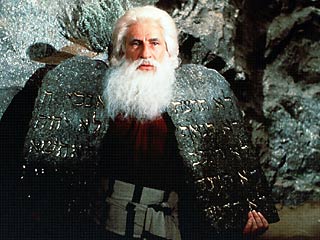
The human nature of the question of a Supreme Being . . .
In order to begin your study of questions of a Supreme Being, please read through Chapter 8 of the text and make notes on these ideas. . .
Different Approaches to Concepts of a Supreme Being
Theism
Deism
Polytheism
Monotheism
Pantheism
Panentheism For these six note the similarities and differences between them.
What about the Existence of a Supreme Being (God)?
The Ontological Argument
Cosmological Argument
Argument from Design (Intelligent Design)
Pascal's Wager
Atheism
Hard Determinism
Theories of Freedom
Soft Determinism
And Where Do We Derive Meaning from in our Lives?
Nihilism
Theistic Approach
Non-Theistic Approach
DAY 14 Life is Beautiful
In preparation for your first major assignment we started to watch Life is Beautiful. Roberto Benigni directed and co-wrote this film in part from his own personal history of his father being imprisoned in the Bergen-Belsen concentration camp during WWII. Benigni won the Oscar for Best Actor, Best Foreign Language Film and Best Dramatic Film Score and his acceptance speeches show him just as he played Guido in the film.
This film has many elements of questions of Personhood, Self and Supreme Being in it and that's why it is the perfect match for Metaphysics. We finish the film tomorrow.
This film has many elements of questions of Personhood, Self and Supreme Being in it and that's why it is the perfect match for Metaphysics. We finish the film tomorrow.
Friday, February 24, 2012
DAY 13 Personhood, Animals as Persons and Metaphysics CTQ
Today is an in-class work period to complete your first Metaphysics Critical Thinking Question (it's due Monday). Here is the link for where to post the link to your work Philosophy Assignments Links - the only way to paste the link beside your name is the hit ctrl + v after you've copied your Google Doc or MS Word Online url. Please remember to SHARE your work to me, marktkovich@gmail.com This is a trial run for this, I'm trying to get a sense of how well this works so thank you for helping me with the trial!
The issue of dolphins and other cetaceans being given the status of "persons" and thus being granted human rights that we (people) all enjoy is highlighted in the BBC article. The issue is, of course, also raised in the textbook and we have discussed it in class often - also, have another look at the Bonobo Monkey video of a couple of days ago.
Here's a link to the original story on BBC.uk on Dolphins as "Persons". There are some related links there to check if you are interested or need some other sources of current information.
On Monday we'll start looking at your next project dealing with Answering Life's Fundamental Questions.
As I said at the beginning of class, I'm completely impressed with all of your abilities in the Learning Skills that teachers track for you. You are a mature class with excellent Self-Regulation skills, in Period 3 anyways :-) !! So keep up the good work, I'm very proud of you all. Here's a quick pic of you at work today - everyone on task, asking me good questions, trying your best!! Yay for YOU!!! (sorry, seven of you didn't fit into the picture and several others of you were away today).

The issue of dolphins and other cetaceans being given the status of "persons" and thus being granted human rights that we (people) all enjoy is highlighted in the BBC article. The issue is, of course, also raised in the textbook and we have discussed it in class often - also, have another look at the Bonobo Monkey video of a couple of days ago.
Here's a link to the original story on BBC.uk on Dolphins as "Persons". There are some related links there to check if you are interested or need some other sources of current information.
On Monday we'll start looking at your next project dealing with Answering Life's Fundamental Questions.
As I said at the beginning of class, I'm completely impressed with all of your abilities in the Learning Skills that teachers track for you. You are a mature class with excellent Self-Regulation skills, in Period 3 anyways :-) !! So keep up the good work, I'm very proud of you all. Here's a quick pic of you at work today - everyone on task, asking me good questions, trying your best!! Yay for YOU!!! (sorry, seven of you didn't fit into the picture and several others of you were away today).
Thursday, February 23, 2012
DAY 12 Personhood Continued
1. Finish defining a person. What are your 5 criteria for "personhood"?
Some of your ideas here include: memory, personality, emotions, ability to breath, create ideas through opinions, having a soul, bi-pedal, biologically homo-sapiens-sapiens, having a will to live, mental capacity to think, interact with others, conscience (knowing right from wrong), potential to become human including a zygote and including the potential to get well again after brain death, to be concerned with the future, imagination, unique thoughts.
2. Continuum of personhood:
mammal - ape - pre-conception - zygote - embryo - fetus - late-term - newborn - toddler - child - teen - young adult - adult - retired - senior citizen - infirm - death - after death
3. Video from yesterday
4. Text reading:
Read pp. 133 - 139. Takes notes on the THEORIES and CRITERIA that each of these philosophers sets out.
John Locke
Daniel Dennett
Mary Anne Warren
Annette Baier
(Personal Identity)
Derek Parfit
Some of your ideas here include: memory, personality, emotions, ability to breath, create ideas through opinions, having a soul, bi-pedal, biologically homo-sapiens-sapiens, having a will to live, mental capacity to think, interact with others, conscience (knowing right from wrong), potential to become human including a zygote and including the potential to get well again after brain death, to be concerned with the future, imagination, unique thoughts.
2. Continuum of personhood:
mammal - ape - pre-conception - zygote - embryo - fetus - late-term - newborn - toddler - child - teen - young adult - adult - retired - senior citizen - infirm - death - after death
3. Video from yesterday
4. Text reading:
Read pp. 133 - 139. Takes notes on the THEORIES and CRITERIA that each of these philosophers sets out.
John Locke
Daniel Dennett
Mary Anne Warren
Annette Baier
(Personal Identity)
Derek Parfit
Wednesday, February 22, 2012
DAY 11 Personhood
1. Complete First class travel from Thursday/Friday.
2. What is a person? Define and present.
3. Video: Orangutan Redefine a person?
4. Video: Susan Savage-Rumbaugh Redefine a person?
5. What is more important to personhood; mind (consciousness) or matter (brain and body)?
6. List your 5 criteria for personhood.
2. What is a person? Define and present.
3. Video: Orangutan Redefine a person?
4. Video: Susan Savage-Rumbaugh Redefine a person?
5. What is more important to personhood; mind (consciousness) or matter (brain and body)?
6. List your 5 criteria for personhood.
Tuesday, February 21, 2012
DAY 10 Theories of "The Self". "Personhood in Virginia.
First of all THANK YOU very much for being the seniors in the school - your help in setting up the class after moving 35 desks back from the caf after the trial Literacy Test today was invaluable, thank you!
Before looking at First Class Travel, let's establish the four big theories of "Self":
Project Theory
Who: Jean-Paul Sartre
Narrative Theory
Who: Ricoeur:
Substance Theory:
Who: Descartes
HOUSE BILL NO. 1 Offered January 11, 2012 Prefiled November 21, 2011 A BILL to construe the word "person" under Virginia law, including but not limited to § 8.01-50 of the Code of Virginia, to include unborn children.---------- Patrons-- Marshall, R.G. and Cline; Senators: Colgan and Garrett ---------- Referred to Committee for Courts of Justice ----------
Before looking at First Class Travel, let's establish the four big theories of "Self":
Bundle Theory
Who: David Hume
Who: David Hume
- the "Bundle" refers to the collection of experiences that you carry around with you forever.
- the Bundle represents your experiences.
- It's a loose collection of PERCEPTIONS about your past experiences.
Project Theory
Who: Jean-Paul Sartre
- the "Project" refers to an ongoing, never-ending project, like the building of a bridge that never ceases.
- always evolving, your "self" is always changing, it's connected to the past (experiences) and the future.
- The exact nature of the project that Sartre refers to is connected to the soul, morals, conscious thinking.
Narrative Theory
Who: Ricoeur:
- The image of a "Book" comes to mind, somewhere to write your own story.
- The main character is created by one's experiences and present events.
- The story is related to other people too, and everyone's book intermixes.
- Your story never ends, even after death as your story continues to be written in other people's narratives (books).
Substance Theory:
Who: Descartes
- the "Substance" is a mental substance of the mind, NOT derived from material things.
- This is the opposite of the Bundle Theory.
- Experiences do NOT change the self, they only send the self in difference directions.
- This is analogous to a sail boat, e.g., "the HMS Self" - the wind are experiences that may change the boat's direction in the water but do not change the boat in any way.
Here's a link to just one of many news stories on the following topic: "Women Rally in Virginia"
The "Personhood" Bill of Virginia:
Be it enacted by the General Assembly of Virginia:
1. § 1. The life of each human being begins at conception.
§ 2. Unborn children have protectable interests in life, health, and well-being.
§ 3. The natural parents of unborn children have protectable interests in the life, health, and well-being of their unborn child.
§ 4. The laws of this Commonwealth shall be interpreted and construed to acknowledge on behalf of the unborn child at every stage of development all the rights, privileges, and immunities available to other persons, citizens, and residents of this Commonwealth, subject only to the Constitution of the United States and decisional interpretations thereof by the United States Supreme Court and specific provisions to the contrary in the statutes and constitution of this Commonwealth.
§ 5. As used in this section, the term "unborn children" or "unborn child" shall include any unborn child or children or the offspring of human beings from the moment of conception until birth at every stage of biological development.
§ 6. Nothing in this section shall be interpreted as creating a cause of action against a woman for indirectly harming her unborn child by failing to properly care for herself or by failing to follow any particular program of prenatal care.
§ 7. Nothing in this section shall be interpreted as affecting lawful assisted conception.
Wednesday, February 15, 2012
DAY 9 First Class Travel? (Feb 16)
I am away today with the Ski/Board Racing Team but you are still responsible for this work to be done on your own time. If there's a sign-in then please sign in at the main office and get to work on this - it's a carry over from yesterday's notes. You'll have to have completed yesterday's notes to do First Class Travel properly.
First Class Travel, p. 140
1. Evaluate the arguments in favour of interpreting stepping into the transporter as a way of travelling. In BLUE, suggestions from our awesome class, Feb 22.
- the person (self) will not change physically, psychologically and experimentally. This is convenient, no waiting times. Efficient in the extreme. No major collisions, very safe. Economical. Potential for danger because anyone from anywhere can just show up on our doorstep - no checks/balances on who goes where. ICE, quick response time
2. Evaluate the arguments in favour of interpreting stepping into the transporter as a way of dying. Because it's just a copy of you, it's not the real you thus you die (in a sense), physically. The machine destroys your body, including your brain, therefore you disappear (die). We cannot separate mind/body.
3. How would Hobbes and company (Materialists, see. p 113 and your notes) explain or react to each of your evaluations above (in #1 & #2)? See above. Materialists would not want to use such a machine because they are "attached" to their physical beings. On the other hand, materialists might actually want to use the machine because all that's being transported is matter - so at the other end, you are reconstructed and thus able to create the same mental state of being and thus do not change.
4. Explain how well or poorly this time machine would be an acceptable way of travel to a philosopher who adheres to the:
- substance theory (Descartes) Would like the machine because the mind never changes, we can ignore the temporary decomposition of the brain. Also, that experience of "time travel" does not change the self.
- bundle theory (Hume) Hume would enjoy the machine as it's just another experience to add to your bundle of experiences, and yes, you'd change because of that experience but that's ok.
- project theory (Sartre) would enjoy the machine because the self is just an event in time, not a thing, so the machine wouldn't change anything. Also, experiences are necessary and this is just another experience. But, the Project theory indicates an unbroken set of experiences and this machine would temporarily break that continuum.
A note about critical thinking (First Class Travel is all about thinking critically on an issue).
First Class Travel, p. 140
1. Evaluate the arguments in favour of interpreting stepping into the transporter as a way of travelling. In BLUE, suggestions from our awesome class, Feb 22.
- the person (self) will not change physically, psychologically and experimentally. This is convenient, no waiting times. Efficient in the extreme. No major collisions, very safe. Economical. Potential for danger because anyone from anywhere can just show up on our doorstep - no checks/balances on who goes where. ICE, quick response time
2. Evaluate the arguments in favour of interpreting stepping into the transporter as a way of dying. Because it's just a copy of you, it's not the real you thus you die (in a sense), physically. The machine destroys your body, including your brain, therefore you disappear (die). We cannot separate mind/body.
3. How would Hobbes and company (Materialists, see. p 113 and your notes) explain or react to each of your evaluations above (in #1 & #2)? See above. Materialists would not want to use such a machine because they are "attached" to their physical beings. On the other hand, materialists might actually want to use the machine because all that's being transported is matter - so at the other end, you are reconstructed and thus able to create the same mental state of being and thus do not change.
4. Explain how well or poorly this time machine would be an acceptable way of travel to a philosopher who adheres to the:
- substance theory (Descartes) Would like the machine because the mind never changes, we can ignore the temporary decomposition of the brain. Also, that experience of "time travel" does not change the self.
- bundle theory (Hume) Hume would enjoy the machine as it's just another experience to add to your bundle of experiences, and yes, you'd change because of that experience but that's ok.
- project theory (Sartre) would enjoy the machine because the self is just an event in time, not a thing, so the machine wouldn't change anything. Also, experiences are necessary and this is just another experience. But, the Project theory indicates an unbroken set of experiences and this machine would temporarily break that continuum.
A note about critical thinking (First Class Travel is all about thinking critically on an issue).
DAY 8 Theories of the "Self"
1. Text reading: chap. 6 pg. 112-119, and pg. 122 & 125. Take notes on the following:
3. Read "First Class Travel" p. 140
- idealism
- realism
- materialism
- monoism
- dualism
- determinism
- ontology
- subtance theory
- bundle theory
- narrative structure
- project theory
3. Read "First Class Travel" p. 140
Monday, February 13, 2012
DAY 7 You the Philosopher and Metaphysics

What we (you) said as a class:
Ethical, open-minded, curious, respectful, insightful, like debate, thinking, reflective, adventurous, hypothesizer, realist, patient, logical, optimistic, passionate, altruistic, determined, observant, studious, emotional, opinionated, non-biased, communicative, imaginative, questioner, supportive, willing, skeptical
2. Main question: Are humans by nature good or evil? Think-Pair-Share ... discussion
Here's what YOU said:
There's a moving scale of inherent goodness or badness. It's just about impossible to NOT do some harm just by living - we use more than we need. Our attempts at using less, recycling and reusing are just not enough.
People are inherently good because we tend to INTEND to do good, but our experiences can change that outlook. Also, we learn that things are good/no good through experiences.
People are taught to be good as they grow up.
People's intentions are more important than the results.
Bad? People are naturally bad because given the opportunity to do something "bad" most people would take that opportunity. People's nature is such that we seek pleasure and avoid pain.
People are born selfish because we don't know any better - i.e.
3. A psychologist's perspective
4. Does it matter?
5. Free the hikers CNN Part 1 Part 2
DAY 6 Allegory of the Cave
After creating our own "cave" in class, we had an in-depth look at Plato's famous Allegory of the Cave. The ultimate message here is that we live our lives seeing only "shadows" of the truth, and it is not until we accept things as they are, i.e. the truth, that we exit the cave and live in the light. There are many videos of The Cave, here's one.
We moved on to a quick look at several theories in Metaphysics, but more on that later.
We moved on to a quick look at several theories in Metaphysics, but more on that later.
Friday, February 10, 2012
DAY 5 Let's Finish Yesterday's Stuff
Today we'll spend most of the period in the Library Lab - you need to finish your work assigned up till now and we can clarify some of your questions, I was away yesterday with the Ski/Board Race Team.
Also today we will figure out together how best to get your work submitted electronically for me to comment on and mark. I feel that you are all much more technologically adept than I'll ever be so you should teach me some things about how to use all of our IT gear most effectively!
Oh yes, and the Philosophical Gem of the Day is this one from none other than Norman Osborn, aka The Green Goblin:
"We are who we choose to be."

Also today we will figure out together how best to get your work submitted electronically for me to comment on and mark. I feel that you are all much more technologically adept than I'll ever be so you should teach me some things about how to use all of our IT gear most effectively!
Oh yes, and the Philosophical Gem of the Day is this one from none other than Norman Osborn, aka The Green Goblin:
"We are who we choose to be."

Wednesday, February 8, 2012
DAY 4 Philosopher or Scientist?
Continuing on from yesterday . . . complete Tuesday's work (Steps 1 and 2) and then move along to the steps below:
Step 3 of 6
Find a YouTube video and explain it's connection to one of the three Philosophy disciplines above. Paste the url and write your explanation in the Sresources: drive, classes - Kovich - Philosophy folder (or email to me).
Step 4 of 6
Read the textbook pp. 2-9 (in Chapter 1) (it's in Classes - Kovich - Philosophy) and take notes on the following
• Descartes
• Aristotle
• Plato
• Jaspers
• Materliasts
• Autonomy
A note about notes: it is in your very best interest to take thorough and organized notes for all aspects of this course. It's a 12U course and it's challenging - you will need to continually refer to your notes to get ideas, theories and quotes from different philosophers for all of your marked work and for the exam. Start good notes now and you will thank yourself later, honest!
Step 5 of 6
Write a complete answer to Question #2 on p. 10 of the text, "Are you better suited to the study of Philosophy or Science? Explain why." Send me an email - subject, Philosopher or Scientist? for your answer.
Step 3 of 6
Find a YouTube video and explain it's connection to one of the three Philosophy disciplines above. Paste the url and write your explanation in the Sresources: drive, classes - Kovich - Philosophy folder (or email to me).
Step 4 of 6
Read the textbook pp. 2-9 (in Chapter 1) (it's in Classes - Kovich - Philosophy) and take notes on the following
• Descartes
• Aristotle
• Plato
• Jaspers
• Materliasts
• Autonomy
A note about notes: it is in your very best interest to take thorough and organized notes for all aspects of this course. It's a 12U course and it's challenging - you will need to continually refer to your notes to get ideas, theories and quotes from different philosophers for all of your marked work and for the exam. Start good notes now and you will thank yourself later, honest!
Step 5 of 6
Write a complete answer to Question #2 on p. 10 of the text, "Are you better suited to the study of Philosophy or Science? Explain why." Send me an email - subject, Philosopher or Scientist? for your answer.
DAY 3 What is a Person?
We are faced with this simple question, but an integral part of Metaphysics is what is "personhood"? In other words, what are the criteria that must exist in order for an entity to be considered a person? To make a long discussion short we came up with several ideas to consider:
- physical body
- emotional presence
- thinking intellect
- ability to interact with others
- ability to consider others and to realize that others consider us
A short list yes, but this is the essence of the discussion. You will discover as we move through Metaphysics that many philosophers who have gone before you have weighed in on the matter and in each case they have done what we did today, namely:
1. Identify the issue (in this case "personhood")
2. Identify criteria that must be considered in the discussion (see brief list above)
3. Consider each criteria and how much merit it deserves in the discussion. For example a person might be kept alive in a hospital bed with intensive medical intervention but they are clinically brain dead. So how much a part of the person does the brain and its function constitute? and the list of questions continues.
We also discussed "Self" in our introduction to Metaphysics today. Again we came up with a list of criteria that must be considered and weighed. One of the most interesting is the idea of "identity." You are all in an intensive process of discovering and creating your own personal identity in adolescence which is independent (at least much more independent) from the caregivers who have gotten you this far. I discussed the Johari Window as a good starting point including four distinct criteria to consider - here's one link to the Johari Window for you to consider. I wrote this out on the board but said I would post a link so you can study it yourself.
- physical body
- emotional presence
- thinking intellect
- ability to interact with others
- ability to consider others and to realize that others consider us
A short list yes, but this is the essence of the discussion. You will discover as we move through Metaphysics that many philosophers who have gone before you have weighed in on the matter and in each case they have done what we did today, namely:
1. Identify the issue (in this case "personhood")
2. Identify criteria that must be considered in the discussion (see brief list above)
3. Consider each criteria and how much merit it deserves in the discussion. For example a person might be kept alive in a hospital bed with intensive medical intervention but they are clinically brain dead. So how much a part of the person does the brain and its function constitute? and the list of questions continues.
We also discussed "Self" in our introduction to Metaphysics today. Again we came up with a list of criteria that must be considered and weighed. One of the most interesting is the idea of "identity." You are all in an intensive process of discovering and creating your own personal identity in adolescence which is independent (at least much more independent) from the caregivers who have gotten you this far. I discussed the Johari Window as a good starting point including four distinct criteria to consider - here's one link to the Johari Window for you to consider. I wrote this out on the board but said I would post a link so you can study it yourself.
DAY 2 More Introduction
In my absence with the ski team you are to follow Day 1 instructions for the day. It is a sign-in so sign in with Angie and then get to work on the instructions from yesterday.
Monday, February 6, 2012
DAY 1 WELCOME!
Story time!! Zen Shorts - not shorts as in "short pants", but shorts as in "short stories".
Philosophy in Three Minutes or Less
Why Study Philosophy? Matt Groening Explains - he created The Simpsons.
How Would You Solve These Little Life's Problems?
Your First Encounter with Metaphysics - Daniel Dennett on TED Talks.
For tonight and tomorrow at school . . . first of all you will NEED a Gmail account for this course - go and make one for yourself if you don't already have one. Please make it as close to your first and last name as possible - mine is marktkovich@gmail.com - when I first made my account markkovich@gmail.com was already taken so I had to stick my middle initial in there.
Step 1 of 6
Watch these three videos (you can see the text of these talks (subtitles) by clicking the button directly below the video indicating "27 Languages"):
Metaphysics
Epistemology
Ethics
Step 2 of 6
Write your impressions of each of these Philosophy disciplines. You best bet is to do this in your newly discovered Google Docs, which is part of your GMail address . . . starting clicking buttons, you'll see! Remember, this is a 12U course and Iexpect a 12U-level of thinking, writing and effort for all of your work.
Philosophy in Three Minutes or Less
Why Study Philosophy? Matt Groening Explains - he created The Simpsons.
How Would You Solve These Little Life's Problems?
Your First Encounter with Metaphysics - Daniel Dennett on TED Talks.
For tonight and tomorrow at school . . . first of all you will NEED a Gmail account for this course - go and make one for yourself if you don't already have one. Please make it as close to your first and last name as possible - mine is marktkovich@gmail.com - when I first made my account markkovich@gmail.com was already taken so I had to stick my middle initial in there.
Step 1 of 6
Watch these three videos (you can see the text of these talks (subtitles) by clicking the button directly below the video indicating "27 Languages"):
Metaphysics
Epistemology
Ethics
Step 2 of 6
Write your impressions of each of these Philosophy disciplines. You best bet is to do this in your newly discovered Google Docs, which is part of your GMail address . . . starting clicking buttons, you'll see! Remember, this is a 12U course and Iexpect a 12U-level of thinking, writing and effort for all of your work.
Subscribe to:
Posts (Atom)